Platform Thinking
Connected individual products into a broader Fan Engagement OS.

PRINCIPAL PRODUCT DESIGN & GROWTH STRATEGIST
Building a connected platform for modern fan engagement.
Back to Work →Role
Principal Product Design & Growth Strategist
Team
Cross-functional product organization across Product, Engineering, Marketing, Sales, Customer Success, and Executive Leadership.
Ownership
Business Outcome
Defined strategic product experiences connecting sports organizations, sportsbooks, and fans through interactive engagement products.
Genius Sports was developing a growing suite of products designed to help leagues, teams, sportsbooks, media companies, and brand partners engage fans through content, interactive experiences, and digital channels. My role was to help these capabilities operate as a more connected Fan Engagement OS while creating a stronger way for product teams to learn directly with partners.
Genius Sports had a broad portfolio of fan-engagement capabilities, but the larger opportunity was to help those products operate as one coherent ecosystem. Partners needed easier ways to create content, configure experiences, distribute engagement products, and understand performance across their digital channels.
My work connected product strategy, customer insight, platform architecture, interface design, and partner collaboration across the Fan Engagement OS.
As Principal Product Design & Growth Strategist, I led audience engagement and growth strategy across Genius Sports' fan-engagement platform — including Genius Reels, configurable B2B engagement widgets, and partner-facing product experiences — translating fan behavior insights into scalable growth outcomes. Partnering across Product, Engineering, and Marketing, this work increased fan engagement 50% and improved partner adoption 20%. I also created a Lean Design Framework that brought customers directly into discovery, validation, and beta development.
My role extended beyond screen design. I helped identify product gaps, clarify how capabilities should connect, gather customer insight, create research-informed personas, and establish a more repeatable way for teams to build with partners.
Connected individual products into a broader Fan Engagement OS.
Identified customer, workflow, and organizational gaps before teams committed to solutions.
Gathered direct insight from customers and translated it into product direction.
Worked across product, engineering, design, marketing, customer teams, and leadership.
Created a Lean Design Framework and partner beta model where no consistent system previously existed.
Connected Platform Strategy
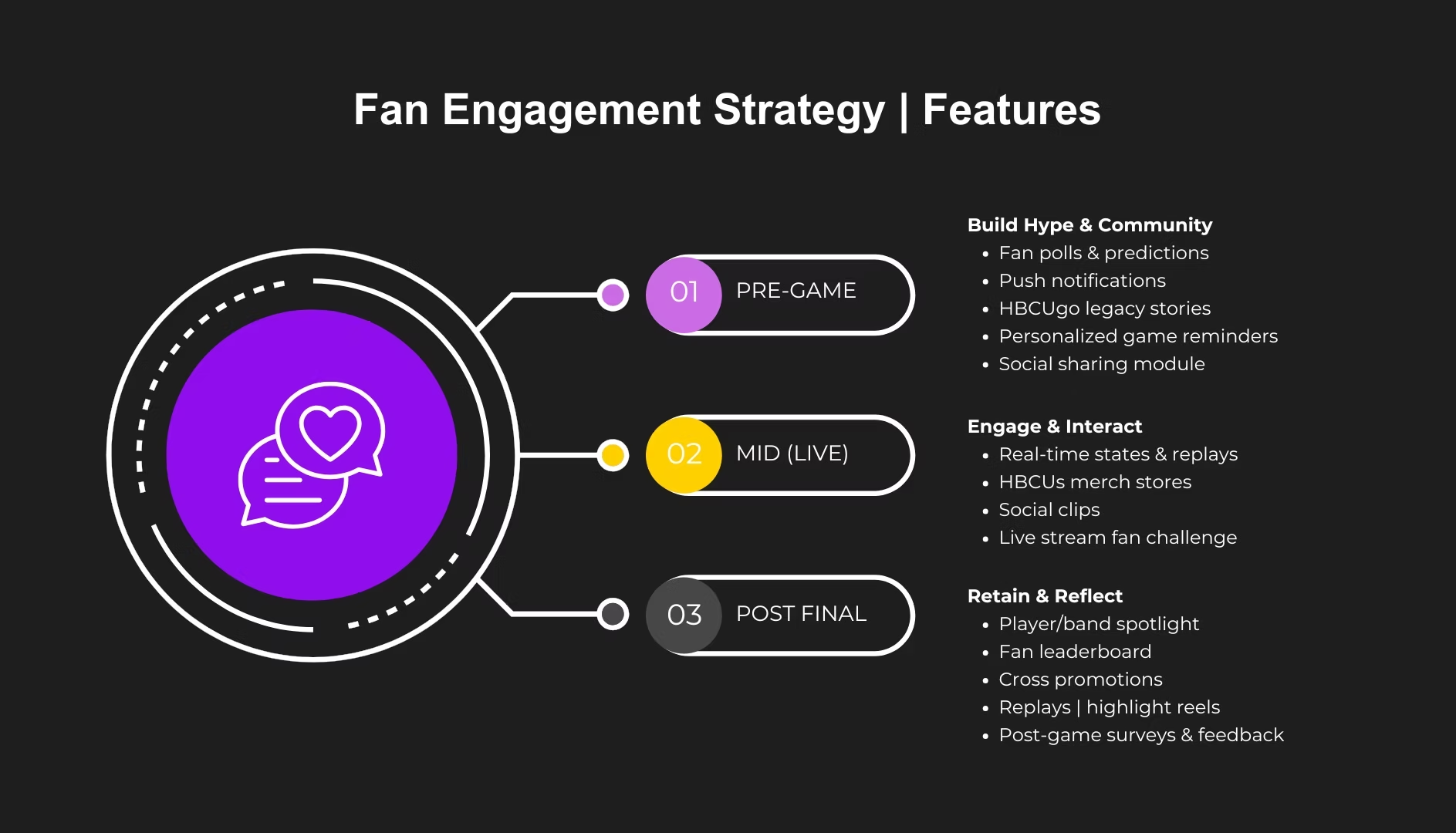
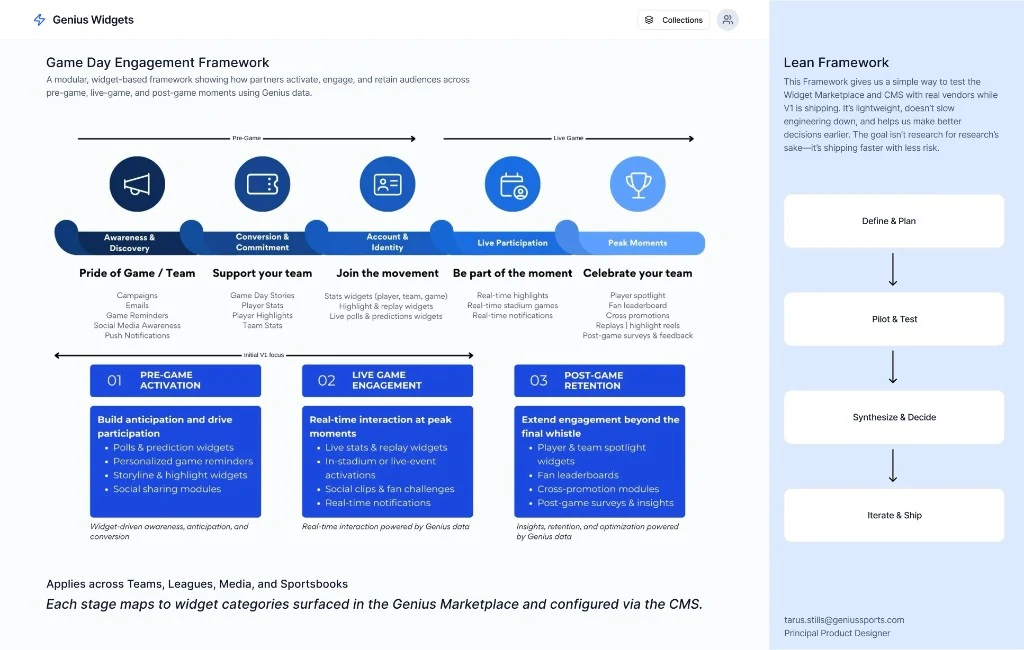
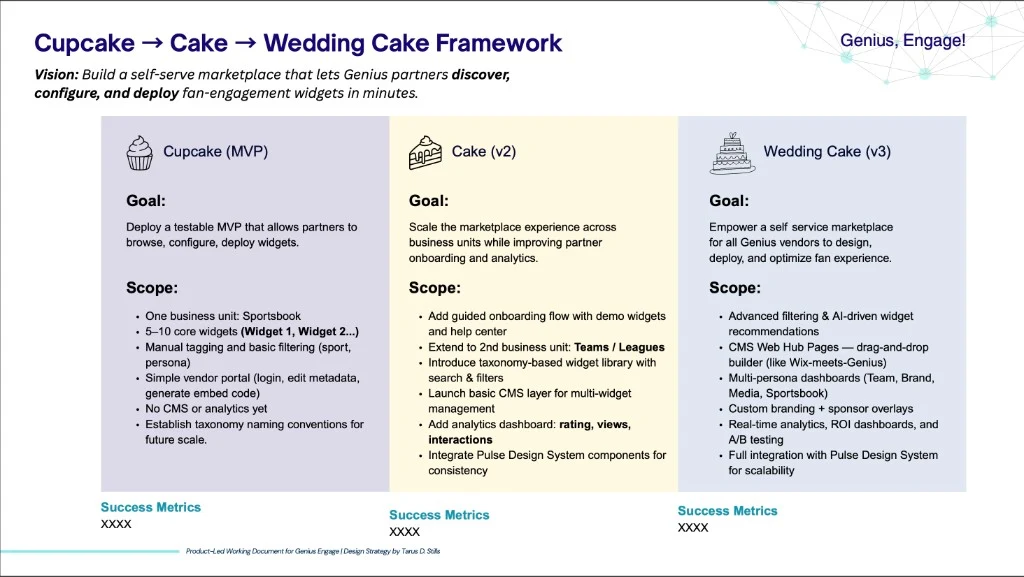
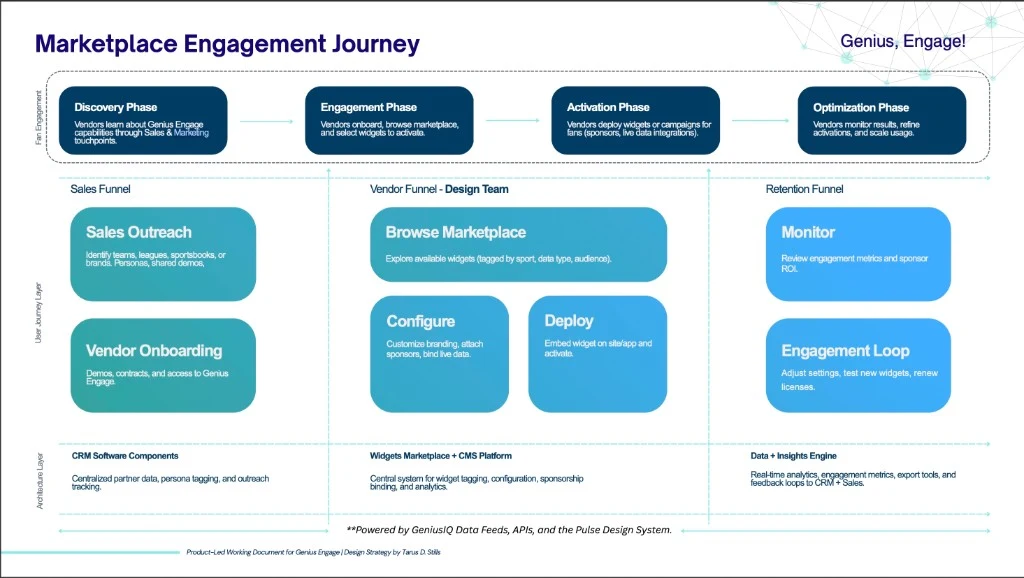
The Fan Engagement OS connected content creation, interactive formats, configurable widgets, partner workflows, distribution, and engagement insight within one larger product ecosystem.
The work required thinking beyond individual features. I helped clarify how products could share patterns, data, workflows, and partner value while still supporting different use cases across leagues, teams, sportsbooks, publishers, and brands.
Content Creation
Genius Reels supported the creation and distribution of sports content designed for modern digital channels. The product opportunity centered on helping partners move from raw sports moments to branded, platform-ready content with greater speed and consistency.
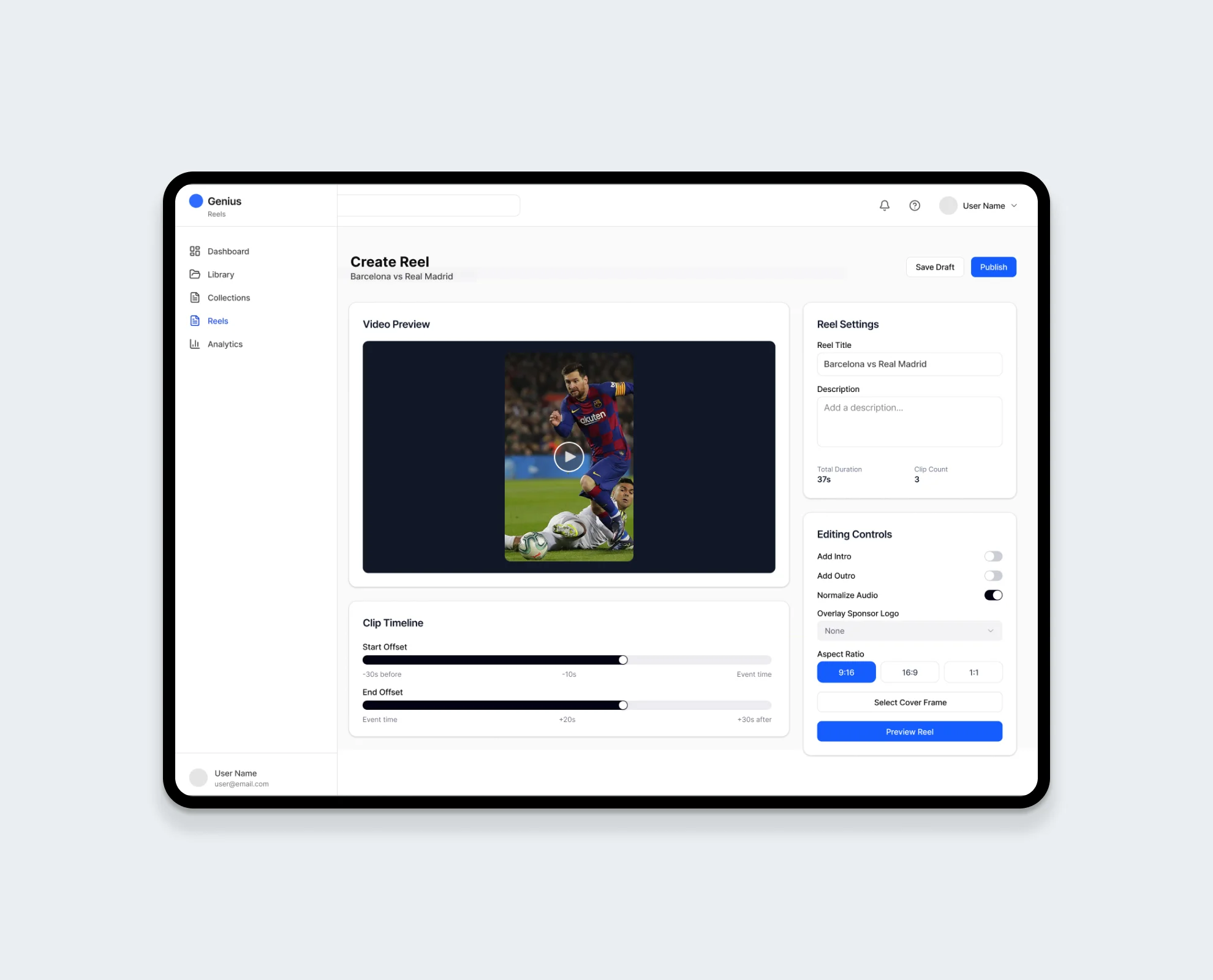
The experience needed to make content production faster without removing the control partners required over format, branding, and publishing decisions.
Configurable Partner Products
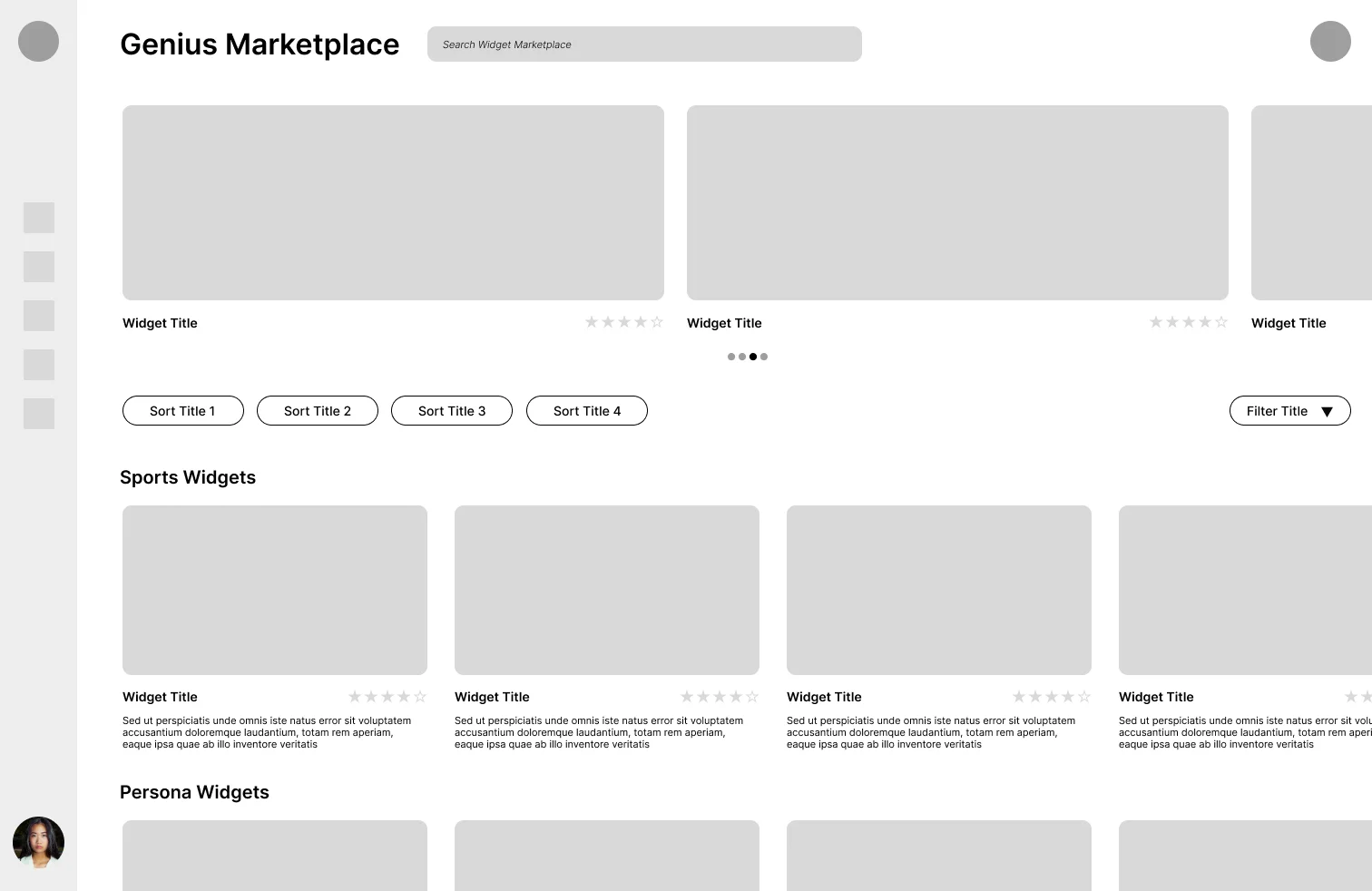
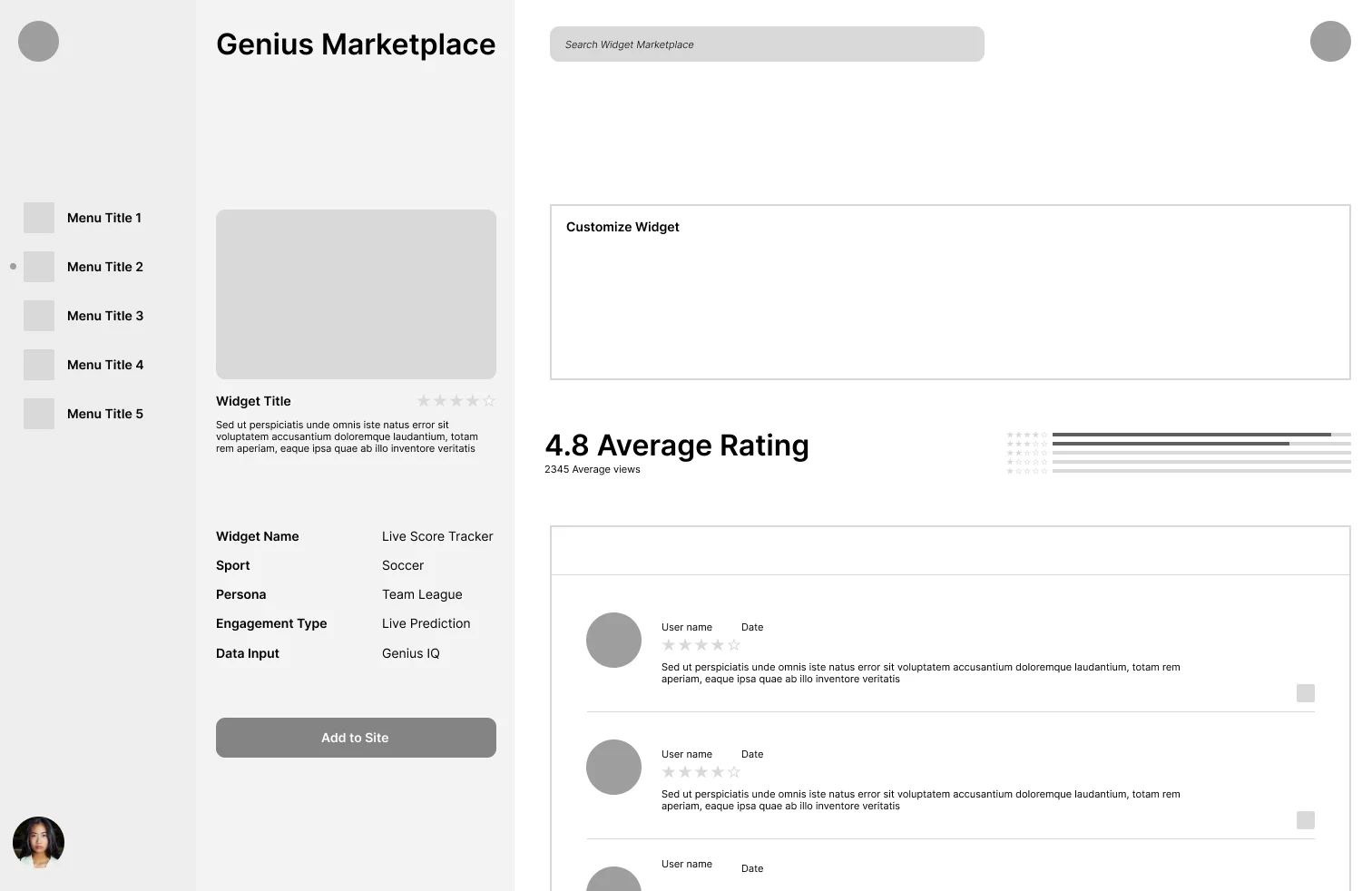
The widget ecosystem gave B2B partners a way to bring interactive fan experiences into their own digital properties. I worked on patterns and workflows that helped make those products more understandable, configurable, reusable, and aligned with the broader platform.
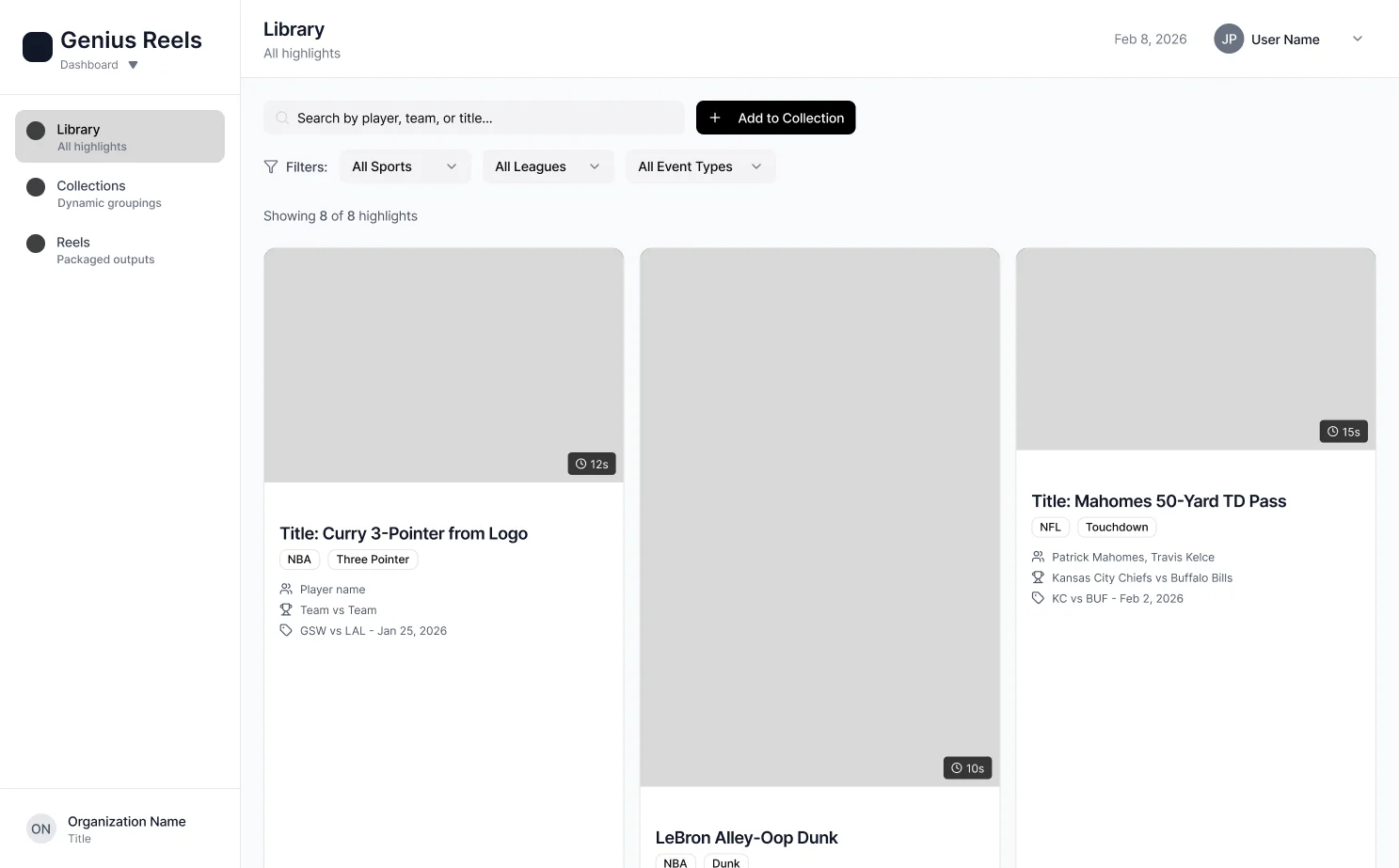
Because the platform served B2B customers, the product had to work at two levels: partners needed intuitive controls and reliable deployment, while fans needed engaging and frictionless experiences.
Organizational Opportunity
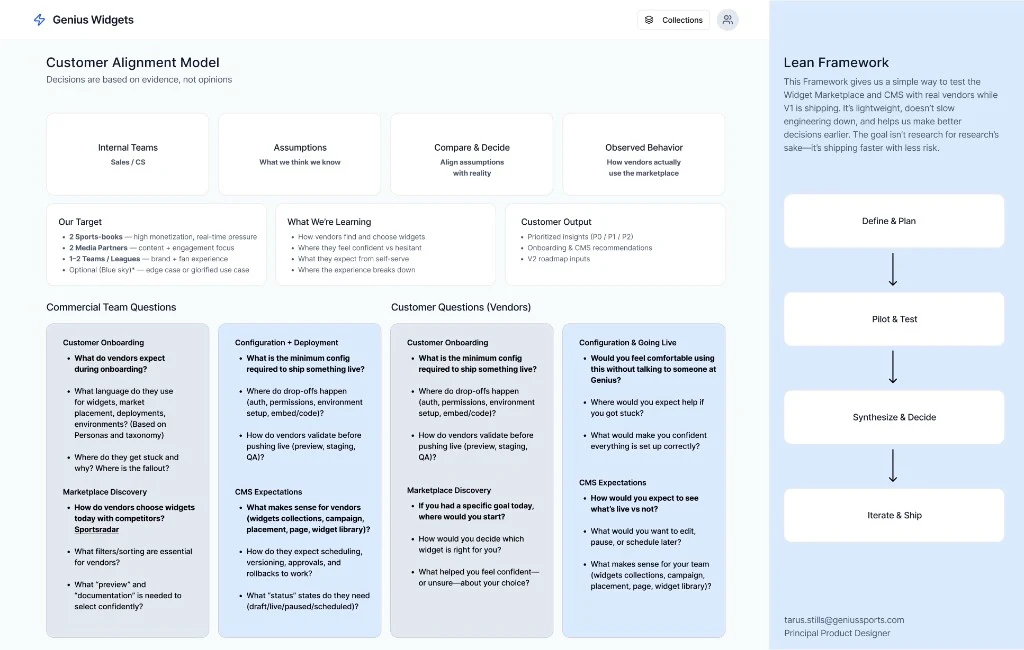
The organization had product expertise and strong commercial relationships, but there was no consistent partner-led discovery or beta-development model. Important product decisions could move forward without enough direct research, shared personas, or structured validation with the customers expected to use the platform.
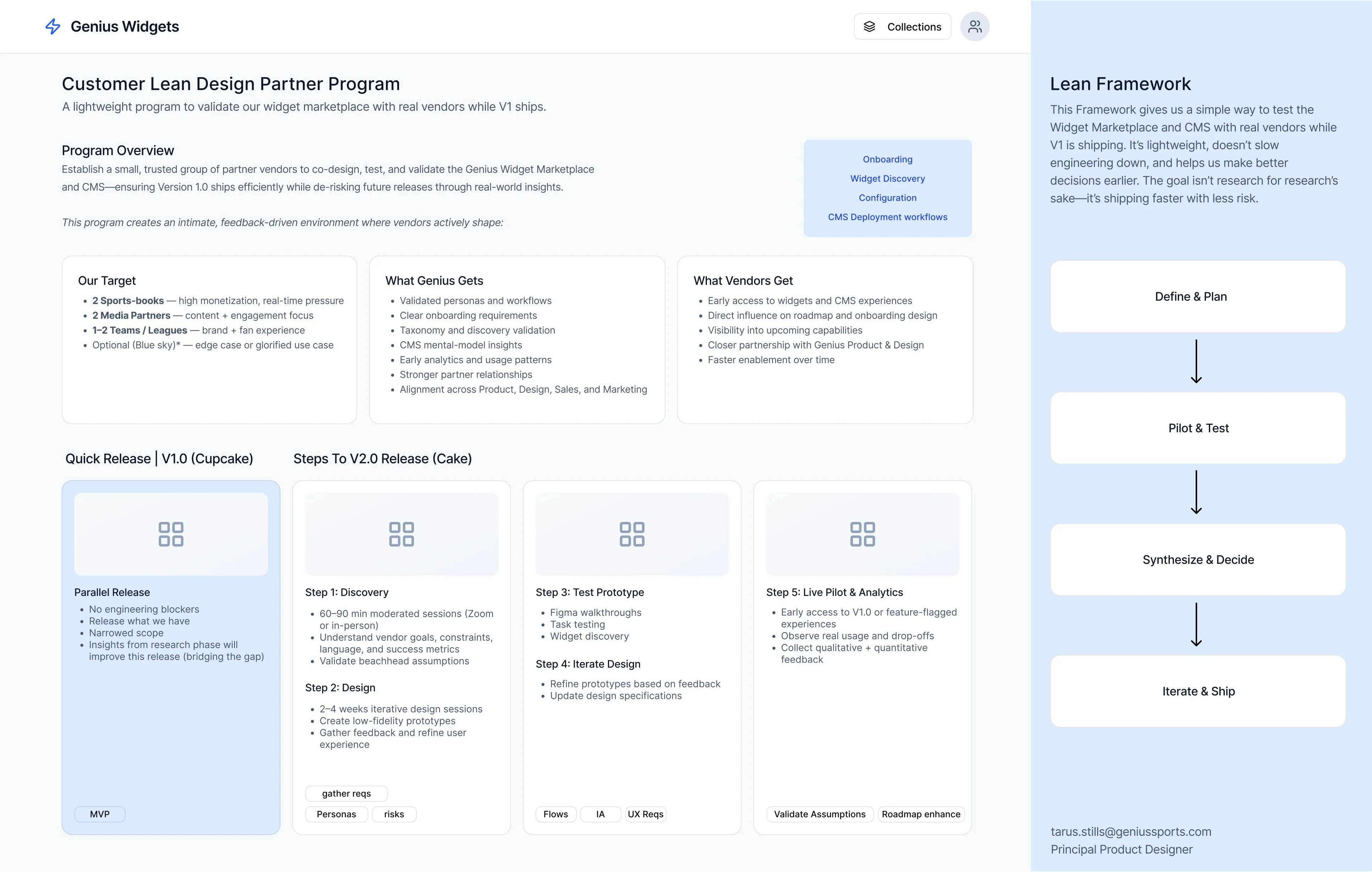
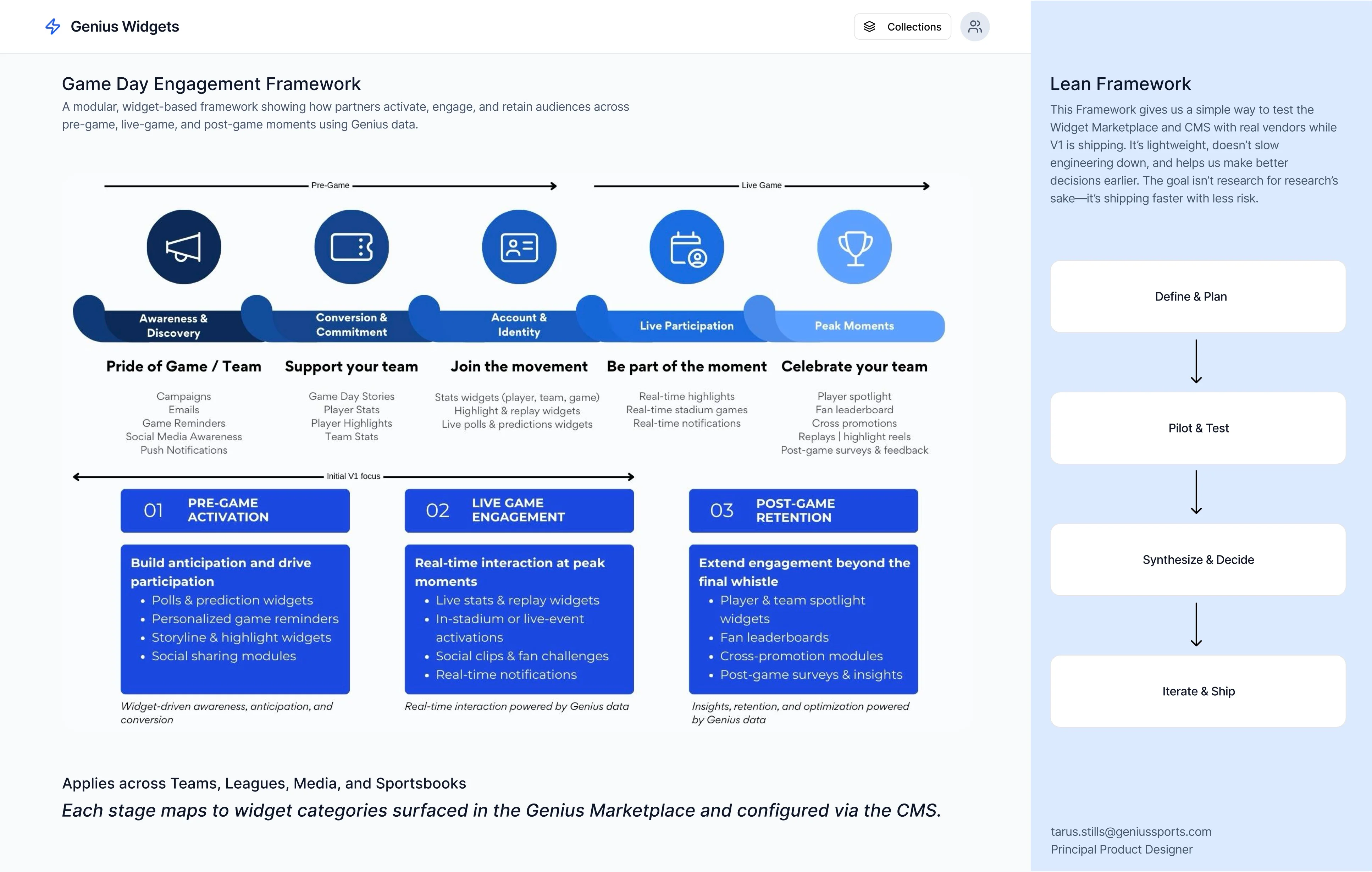
I identified this gap and created a Lean Design Framework that connected customer research, product hypotheses, design exploration, partner feedback, and beta learning.
Clarify the customer problem, business objective, and product hypothesis.
Gather customer, workflow, market, and behavioral insight.
Translate learning into personas, journeys, needs, and product priorities.
Develop concepts with selected partners and internal stakeholders.
Test workflows, concepts, prototypes, and assumptions.
Launch with design partners and establish a structured feedback cadence.
Synthesize evidence, document decisions, and identify unresolved risk.
Translate validated learning into repeatable platform capabilities.
To strengthen product direction, I gathered customer insight and created research-informed personas that helped teams better understand partner contexts, responsibilities, motivations, constraints, and success measures.
The personas were not intended as static deliverables. They were designed to help teams evaluate product decisions through the realities of the customers operating the platform.
Customer Learning System
The Lean Design Framework became the foundation for a closer partner beta model that allowed product teams to build with customers rather than waiting until after launch to discover whether key assumptions were correct.
This created a repeatable path for partner selection, discovery, prototype validation, feedback, beta learning, and product decision-making.
Identify customers with relevant use cases, needs, and readiness.
Understand current workflows, pain points, constraints, and desired outcomes.
Document what the team believes and what evidence is needed.
Review early workflows, prototypes, and product direction.
Use the product in a realistic partner context.
Create structured moments for observation, input, and decision-making.
Turn partner feedback into prioritized product insight.
Use evidence to inform what should be refined, scaled, or reconsidered.
The work required alignment across internal teams and external partners. I translated customer insight into product language, created visual frameworks that made complex decisions easier to discuss, and helped teams connect short-term feature work to the broader platform strategy.
Clarified hypotheses, platform value, priorities, and product implications.
Connected research, architecture, workflows, prototypes, and interface systems.
Reduced ambiguity before larger implementation commitments.
Strengthened the connection between customer needs, product narrative, and partner value.
Created more structured ways to learn from real partner workflows.
Presented frameworks and recommendations that supported decision-making.
The most important contribution was not a single screen or experiment. It was helping establish a more connected way to think about the fan-engagement platform and a more disciplined way to build with the partners using it.
Helped frame Genius Reels, engagement widgets, and partner tools as parts of one broader Fan Engagement OS.
Created a repeatable framework for bringing partner insight into product decisions.
Used research, prototypes, experiments, and beta learning to challenge assumptions earlier.
Created shared language and methods that could support product, design, engineering, marketing, and partner teams.
The Genius Sports work demonstrates my ability to operate across multiple layers of product development: shaping the platform ecosystem, designing partner-facing tools, understanding end-fan behavior, creating research systems, and improving how teams make decisions together.
Connected individual products to a larger ecosystem and partner value proposition.
Designed for the customers configuring and deploying fan experiences.
Created personas and customer insight where teams needed a stronger evidence base.
Built a Lean Design Framework and partner beta model to improve how products were developed.
Genius Sports reinforced that fan engagement cannot be designed only from the perspective of the end user. The platform also has to work for the leagues, teams, sportsbooks, media companies, and brands creating and operating those experiences.
The strongest product decisions came from connecting partner reality, fan behavior, commercial opportunity, technical feasibility, and platform strategy within one shared development process.
Continue to MontageCMS streaming leadership or explore HBCU GO sports platform work.