Parents + Educators
Parents want meaningful media and emotional tools for positive screen time. Educators want engagement-first SEL support that feels culturally relevant — not clinical.

Strategy
Create a franchise ecosystem combining story, SEL learning, community, and play.
Discover
Practice
Transform
Discover
Practice
Apply
Grow
Share
Belong
Franchise Ecosystem
A story-driven franchise ecosystem combining entertainment, SEL, interactive systems, and audience participation into a scalable emotional learning platform.
Built as a scalable ecosystem for publishing, streaming, interactive learning, and future licensing expansion.
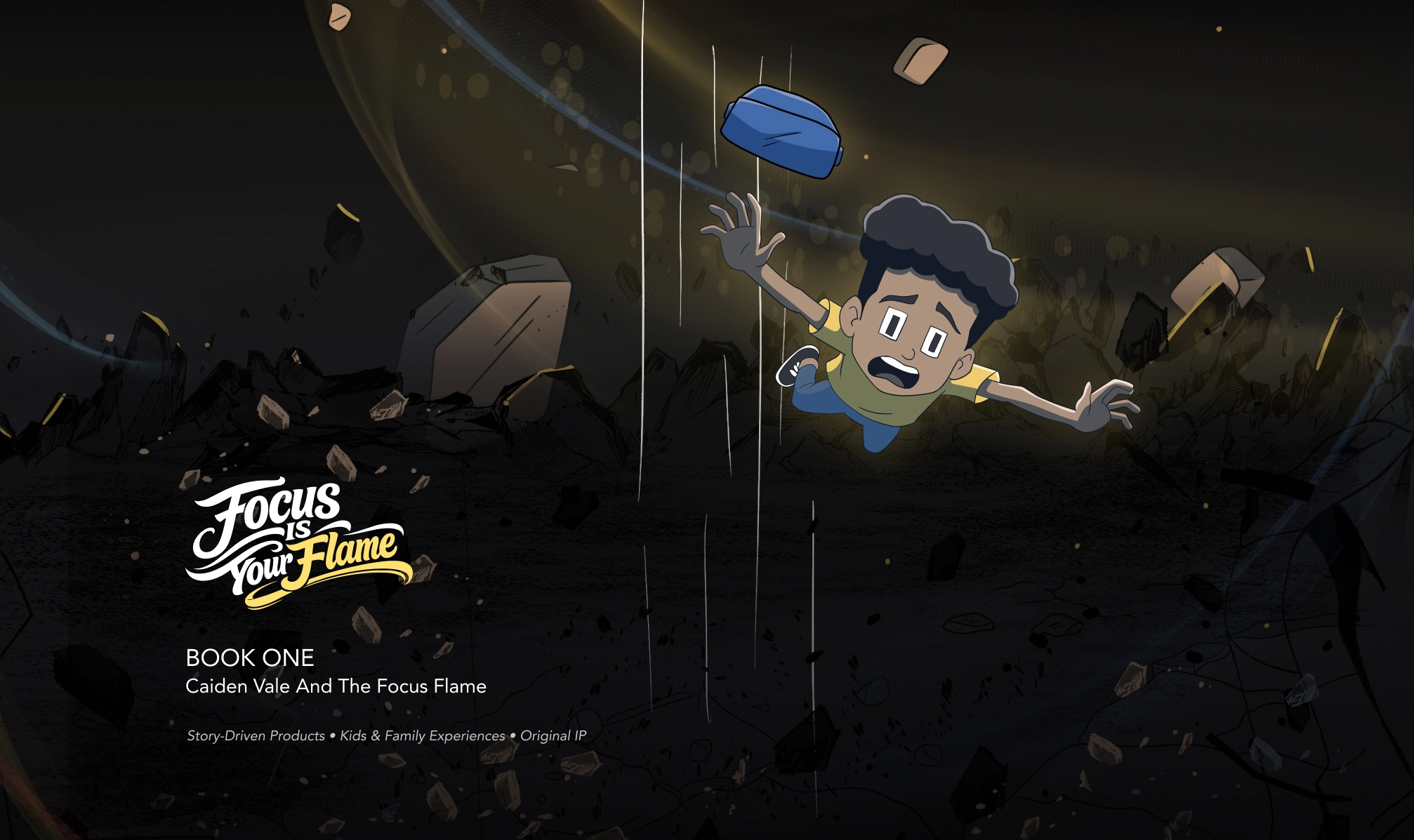
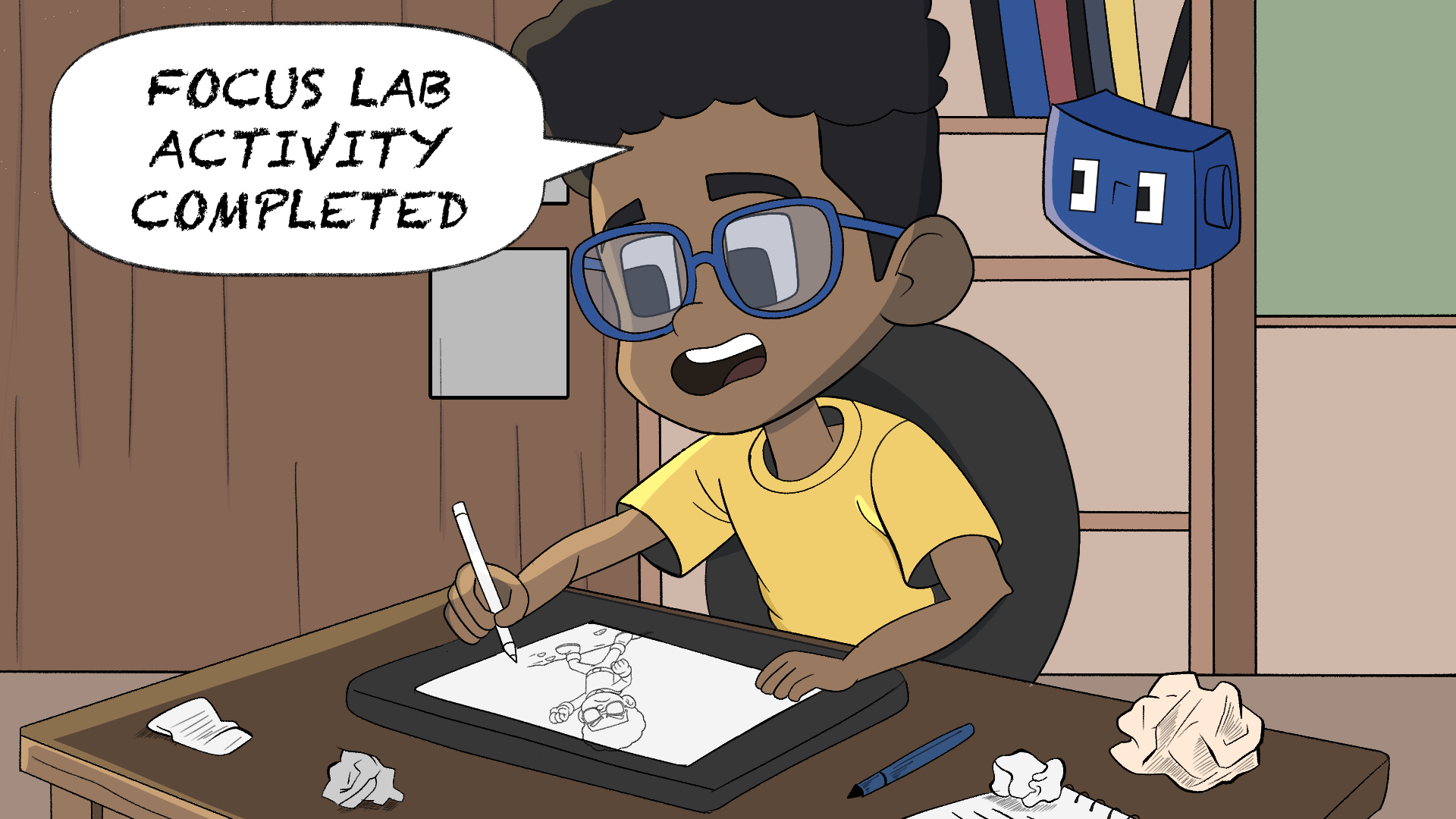
When focus fades, courage answers.Story Reel · Fearless
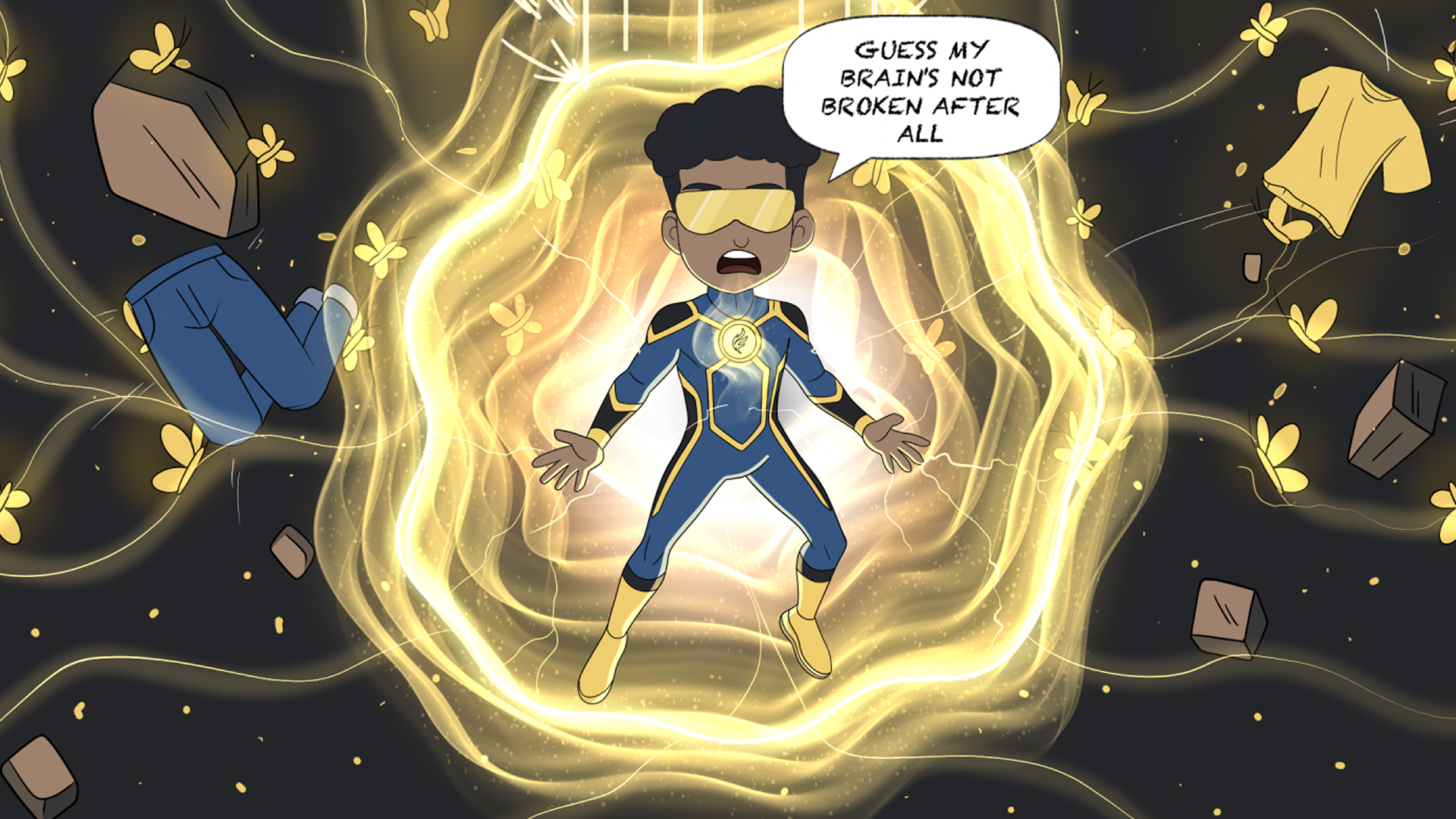
Tap in. Light up. Begin.Story Reel · Tap In
Modern kids are overwhelmed, overstimulated, and emotionally disconnected from traditional educational media.
Parents want meaningful content, emotional tools, and positive screen time. Educators want engagement, SEL support, and culturally relevant learning systems.
Most educational platforms feel instructional. Most entertainment platforms lack emotional depth.
Caiden's Courage was designed to bridge both worlds.
Parents want meaningful media and emotional tools for positive screen time. Educators want engagement-first SEL support that feels culturally relevant — not clinical.
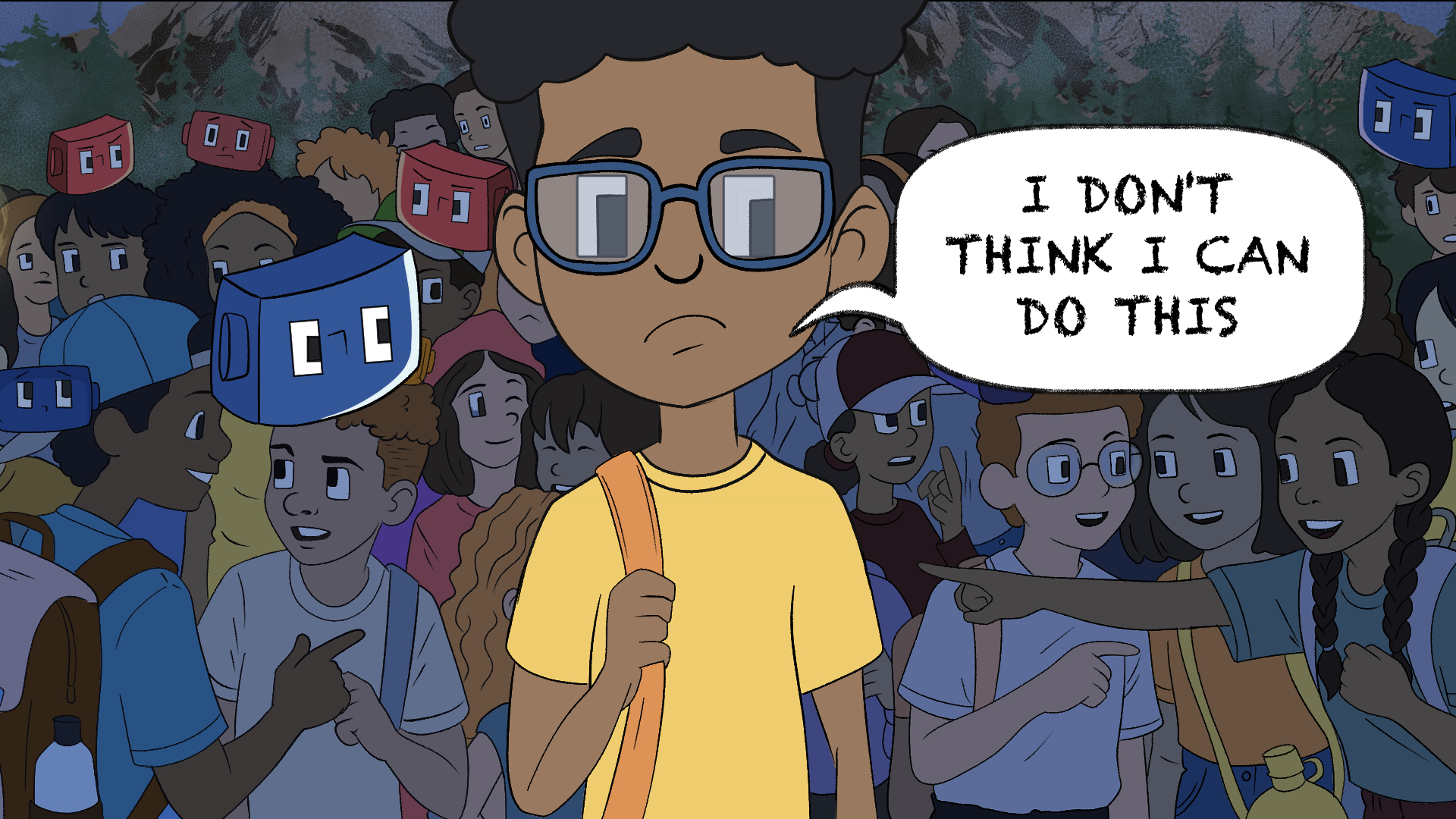
Kids are searching for identity, belonging, immersive worlds, and characters that feel emotionally relatable — not lectures or instructional content.
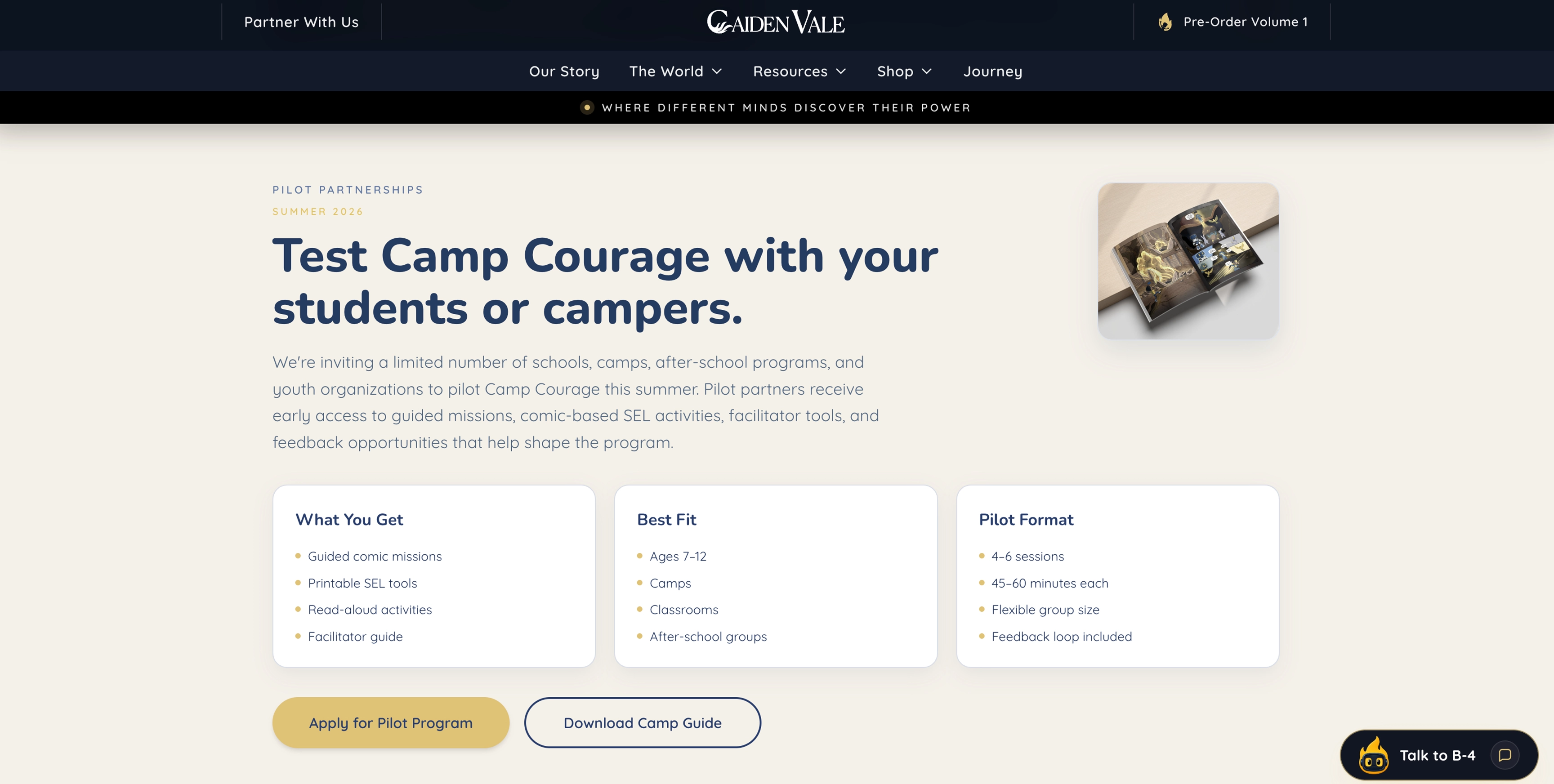
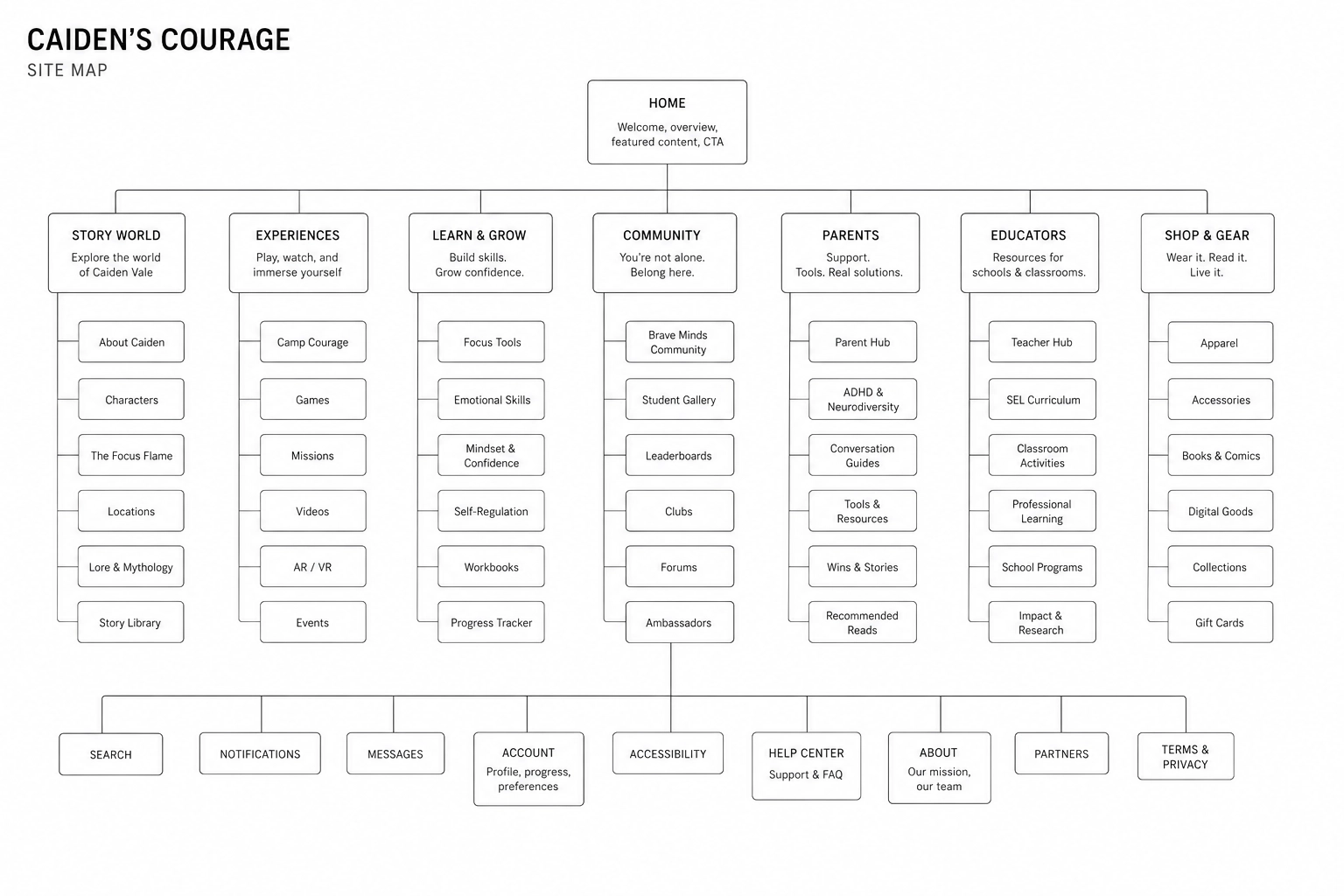
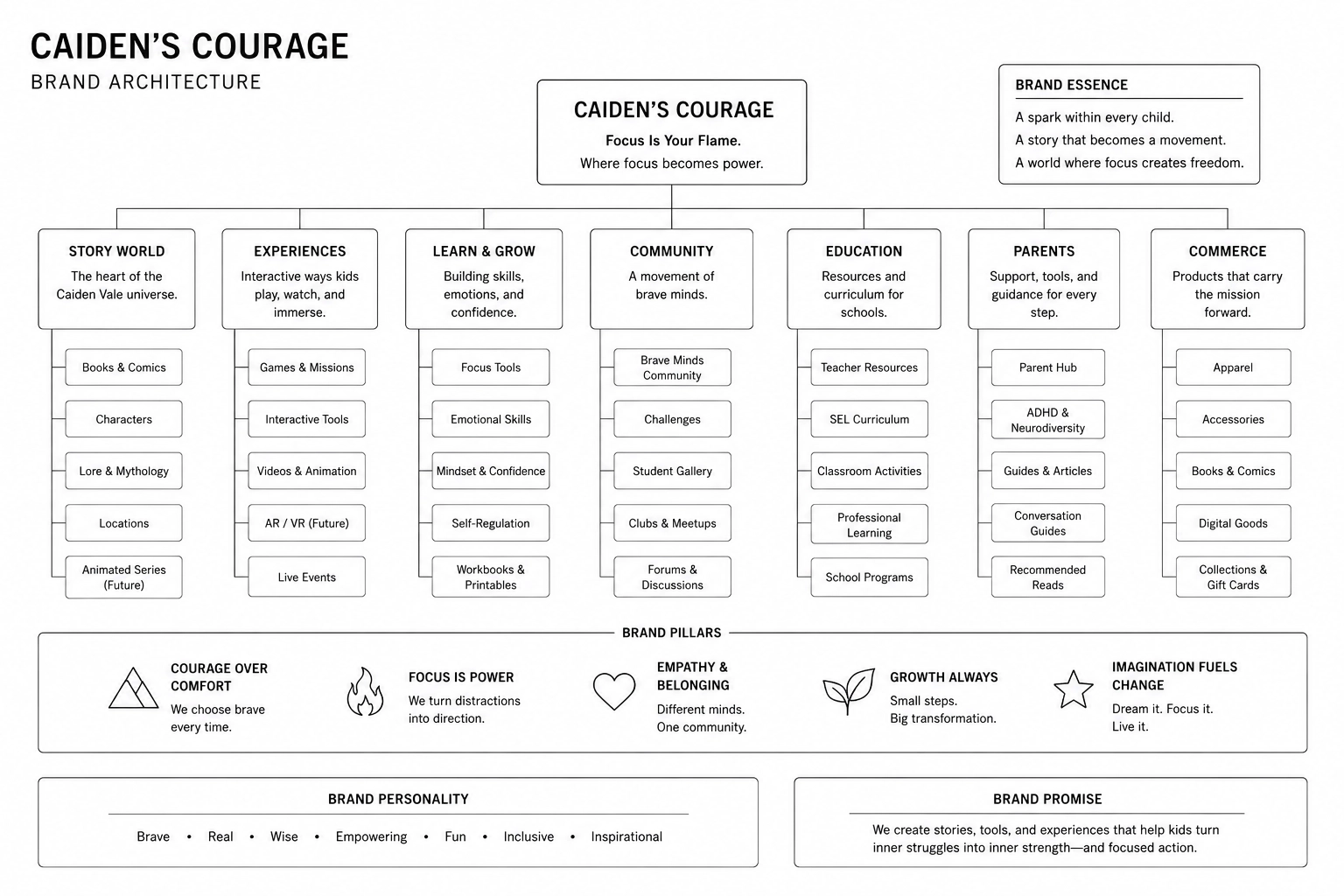
Caiden's Courage was designed as a scalable entertainment ecosystem — combining narrative storytelling, emotional learning, interactive engagement, and community-driven experiences.
This was not built as a single book. It was designed as a world that could expand across publishing, streaming, games, classroom programs, merchandise, and community activations.
Narrative IP and worldbuilding.
Emotional regulation, identity, courage.
Decision-based engagement and play.
Participation, contribution, belonging.
Publishing, animation, merchandise, education.
Focus Is Your Flame.
The core positioning platform reframed focus as confidence, identity, and inner power rather than discipline.
Instead of asking kids to “pay attention,” the brand invited them to discover the power already inside them.
Audience
Need identity, belonging, confidence, and characters that feel emotionally relatable.
Audience
Need meaningful media that supports emotional growth without feeling clinical or instructional.
Audience
Need engagement-first SEL tools that feel culturally current and easy to activate.
Kids don't just consume the story. They become participants in the world.
Participation System
Campaign moments designed for participation, identity, and emotional engagement.
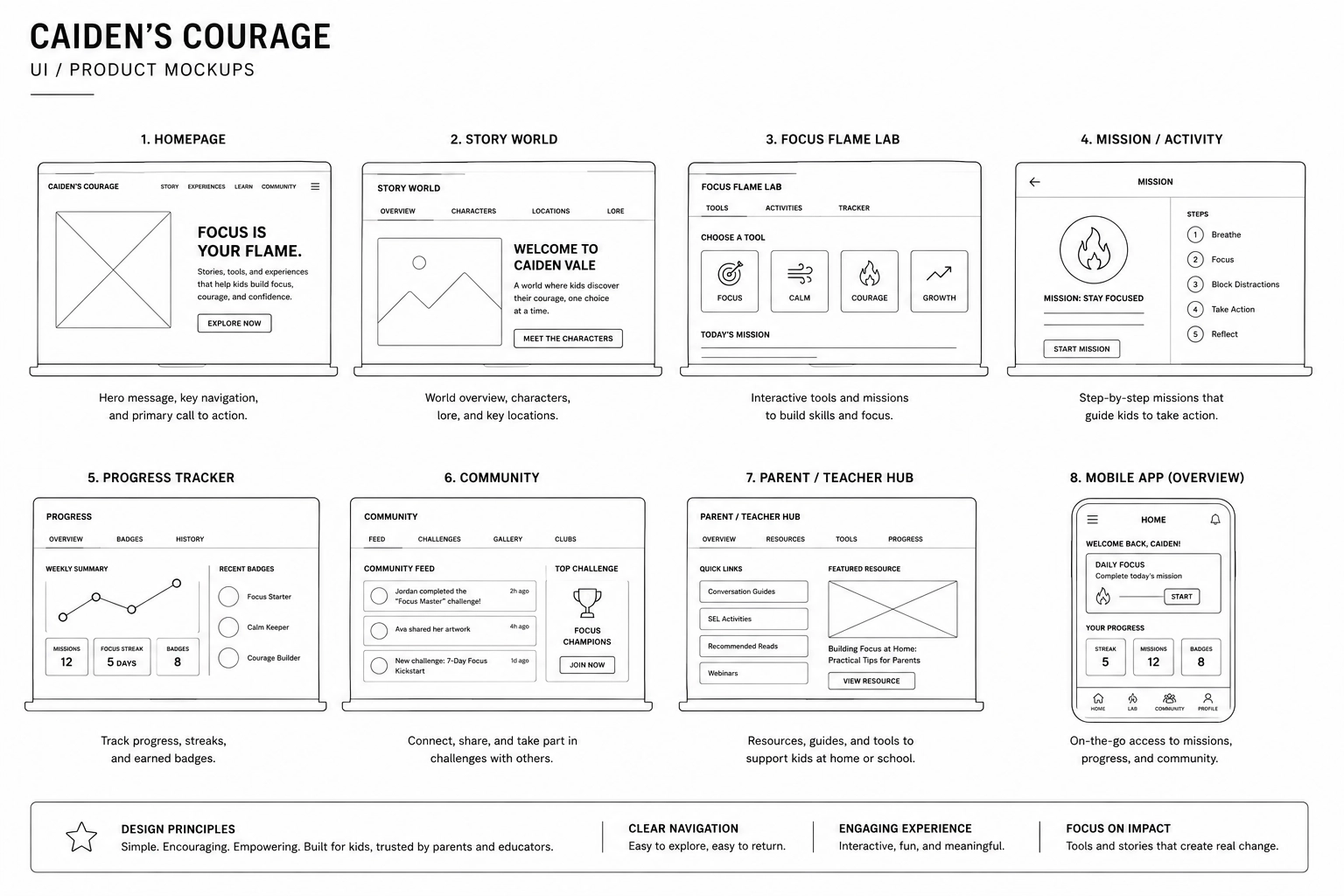
The Caiden's Courage ecosystem was designed to move beyond passive reading into interactive emotional participation.
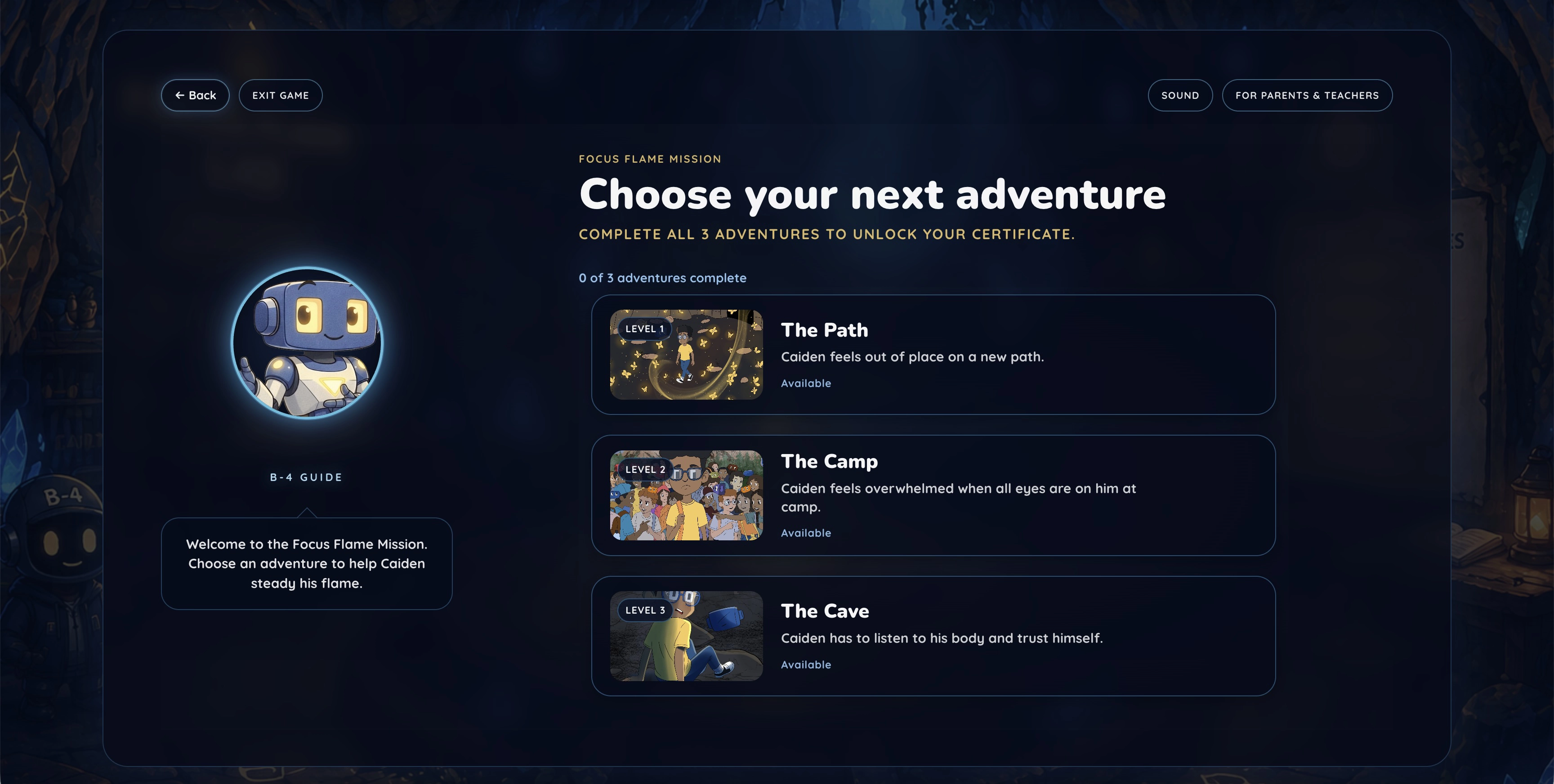
The experience strategy included story moments, decision-based SEL interactions, badge systems, classroom activities, and future-ready digital experiences that help kids practice focus, courage, and emotional regulation.
Story-driven beats that turn emotional learning into participation rather than instruction.
Choice-based mechanics that practice focus, courage, and emotional regulation.
Lightweight progression that rewards growth, reflection, and consistency.
Printable and digital prompts designed for educator activation in minutes.
Future-ready experiential and program-based extensions of the IP.
Bite-sized interactive moments that extend the world beyond the page.
Caiden's Courage was structured as a content engine that could grow across social, short-form video, classroom engagement, digital products, community storytelling, and future streaming concepts.
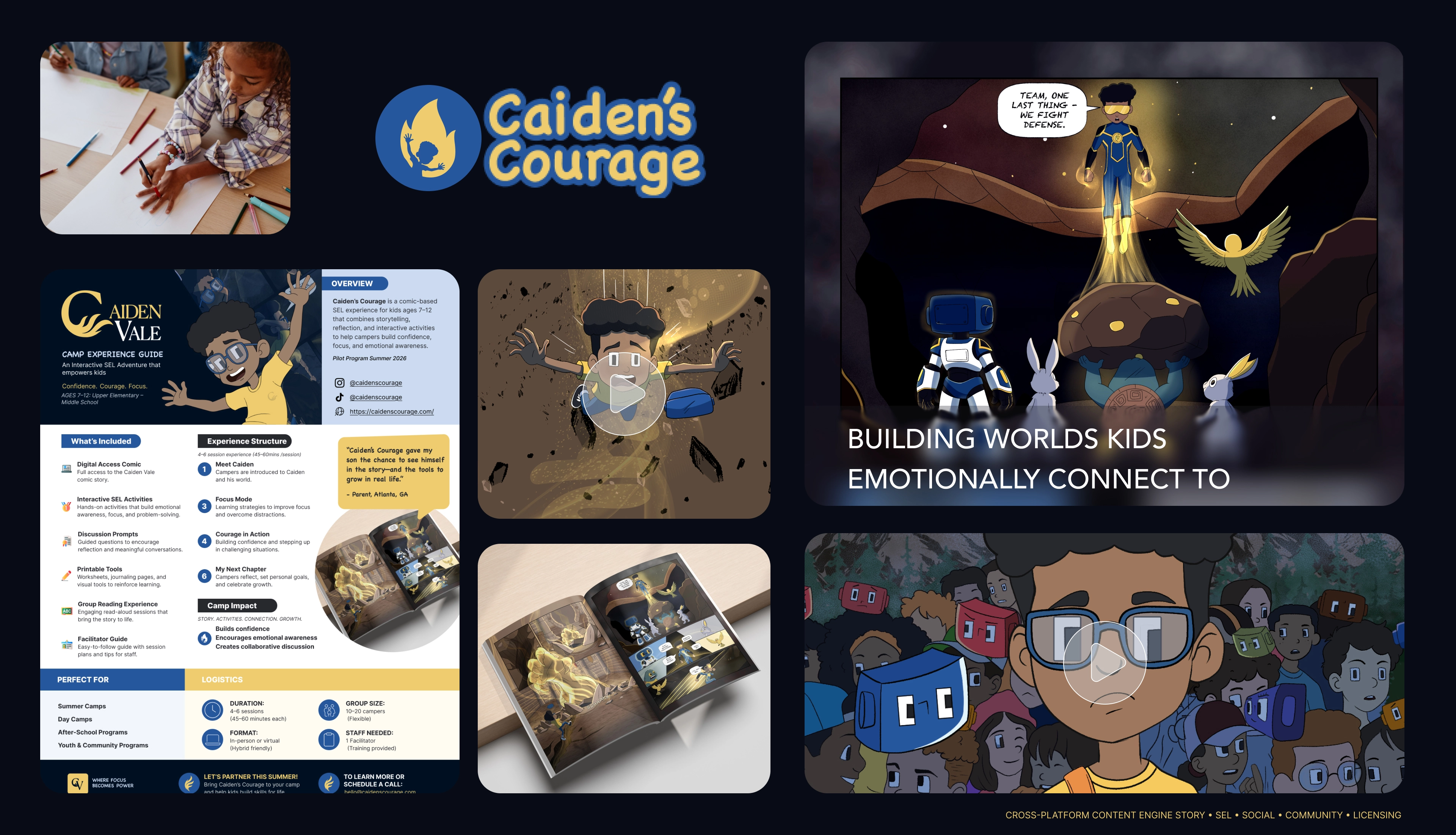
The goal was to make the audience feel like they were part of the world — not just watching it.
Campaign System
Focus Is Your Flame.
Where Focus Becomes Power.
A year-round engagement engine designed to turn emotional storytelling into participation, community, and long-term franchise growth.
“Kids don't just consume the story. They become participants in the world.”
Narrative moments introduce the emotional world.
Short-form content turns story into daily engagement.
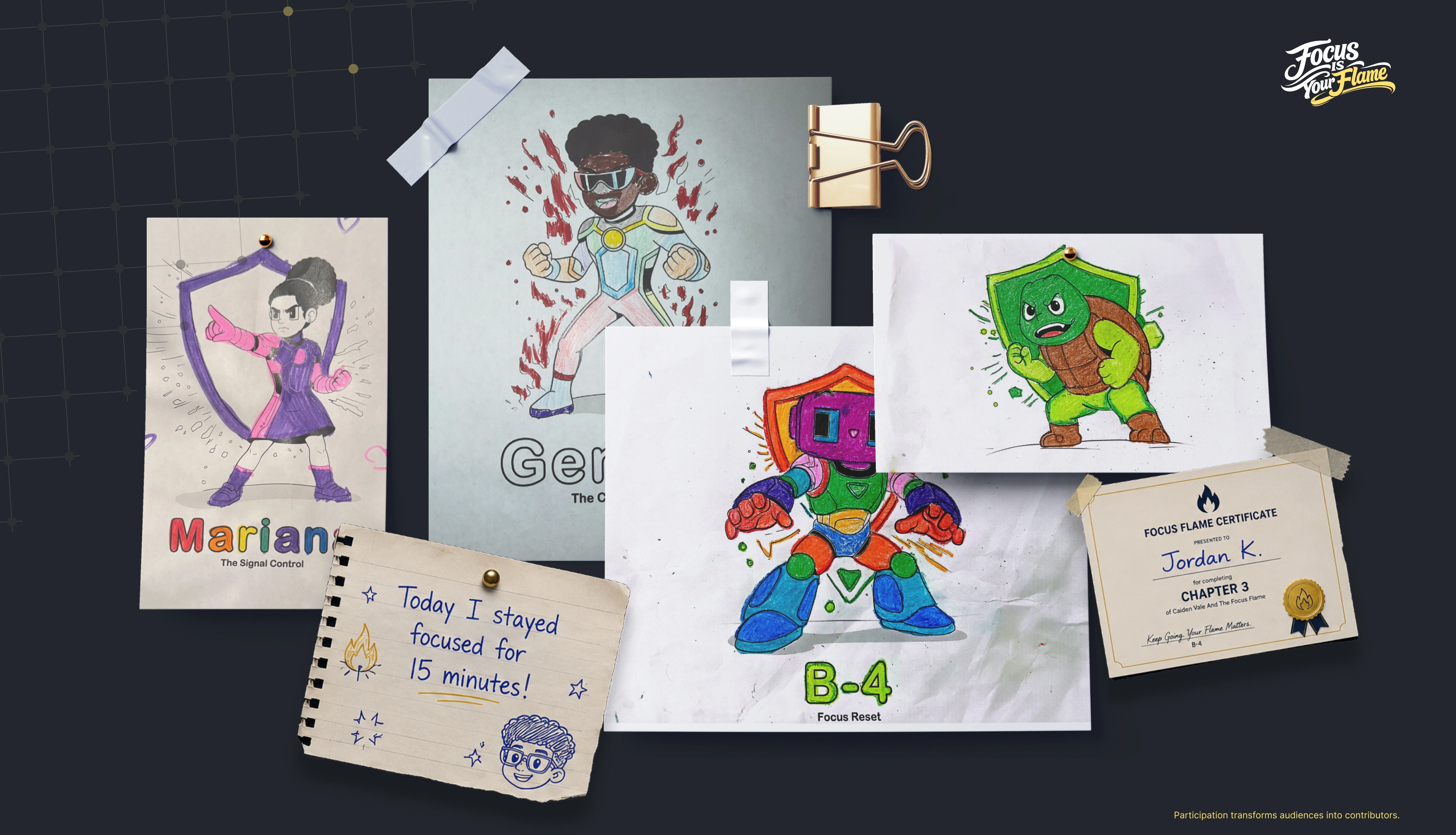
Students, parents, and educators contribute artwork, wins, and reflections.
Missions and SEL mechanics turn attention into action.
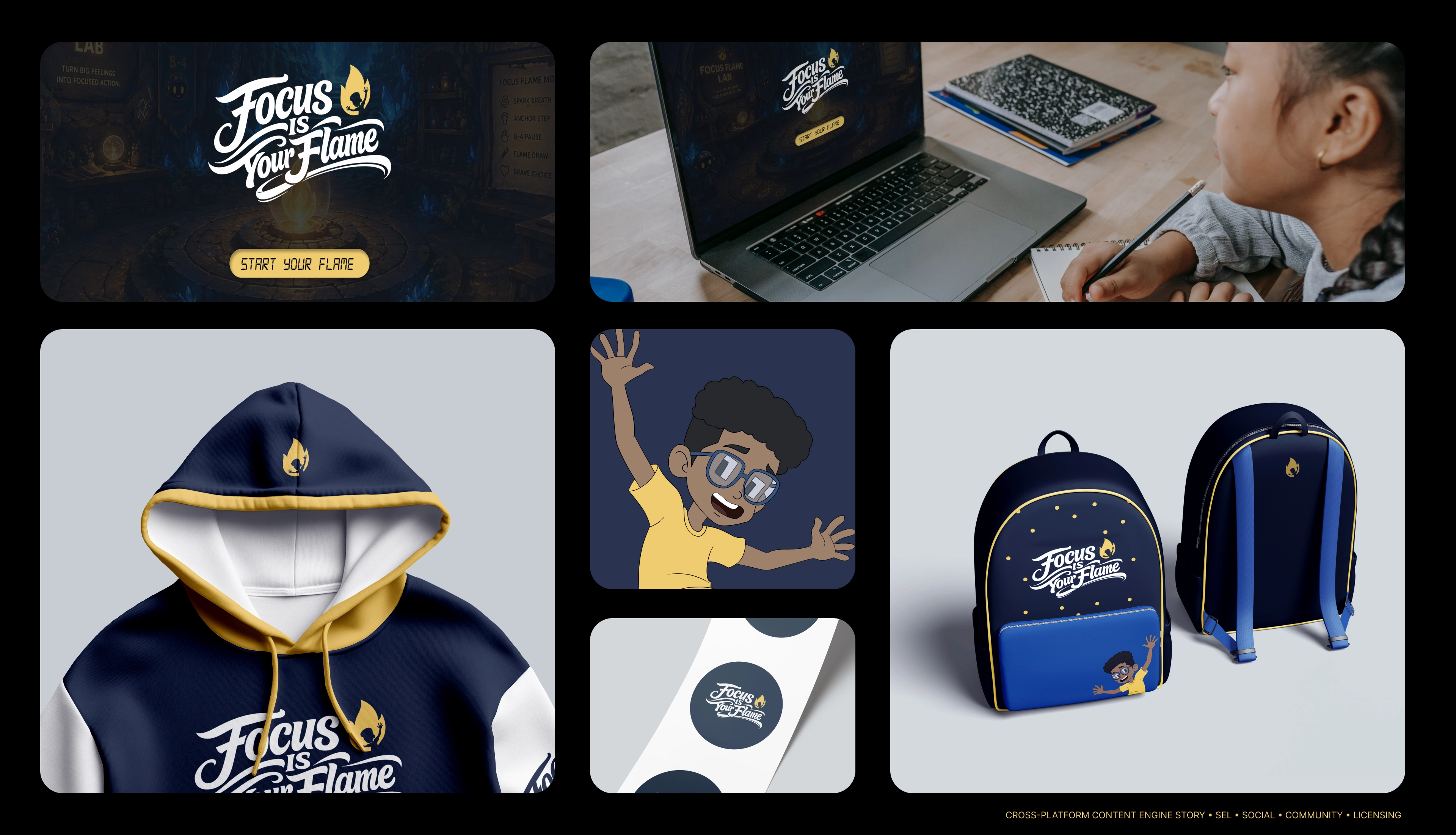
Campaign language becomes wearable identity.
The world expands into publishing, animation, education, and experiences.
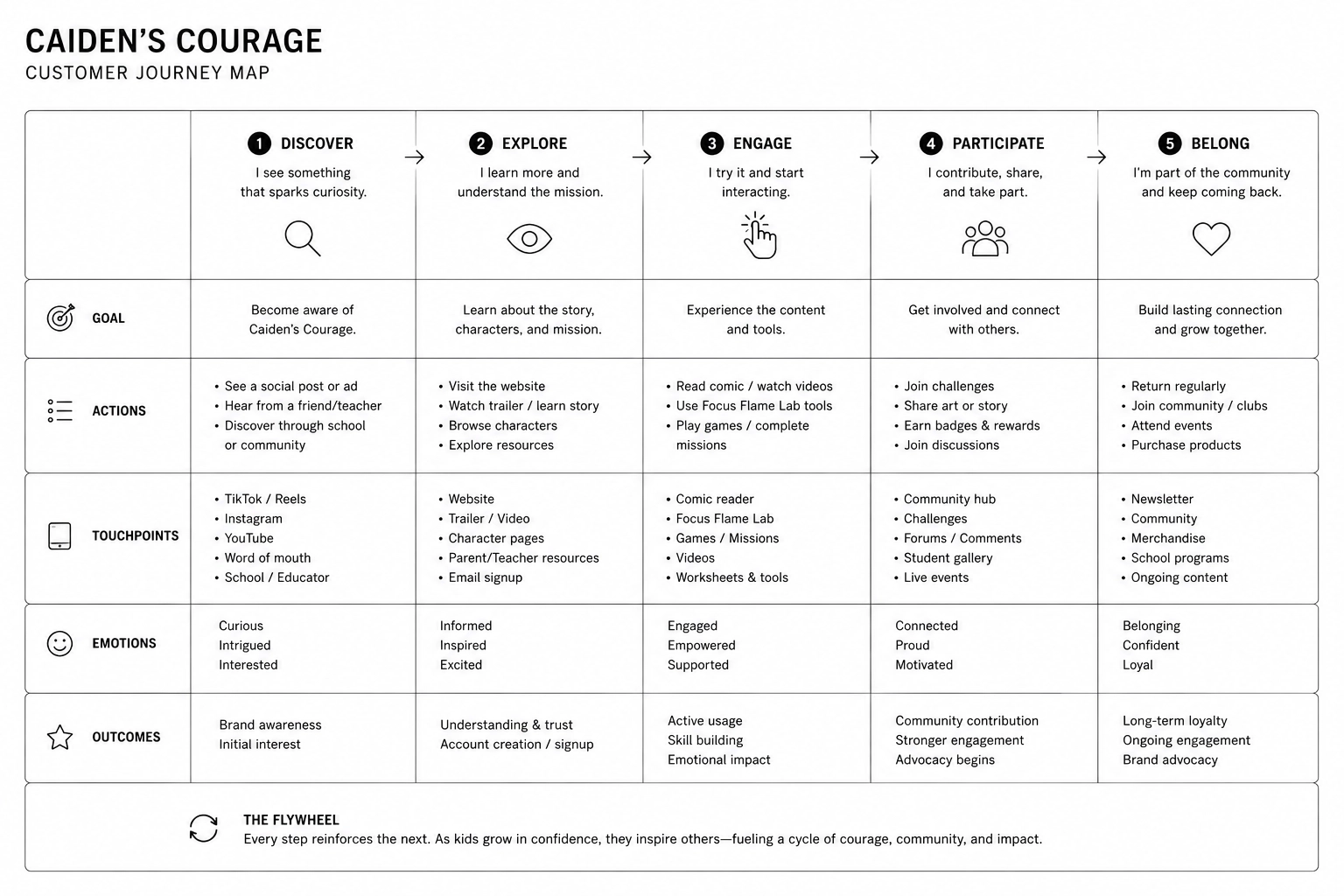
Year-Round Activation Cadence
DISCOVERY
Introduce the world, characters, and emotional premise.
ENGAGEMENT
Invite kids and classrooms into the ecosystem.
IMMERSION
Extend the IP through interactive and educational experiences.
RETENTION
Transform engagement into rituals, community, and repeat participation.
The visual system blended cinematic storytelling, anime-inspired framing, emotional realism, modern youth culture, and premium entertainment branding.
The goal was to make Caiden's Courage feel closer to a premium streaming IP, interactive gaming world, or emotional adventure franchise than traditional children's publishing.
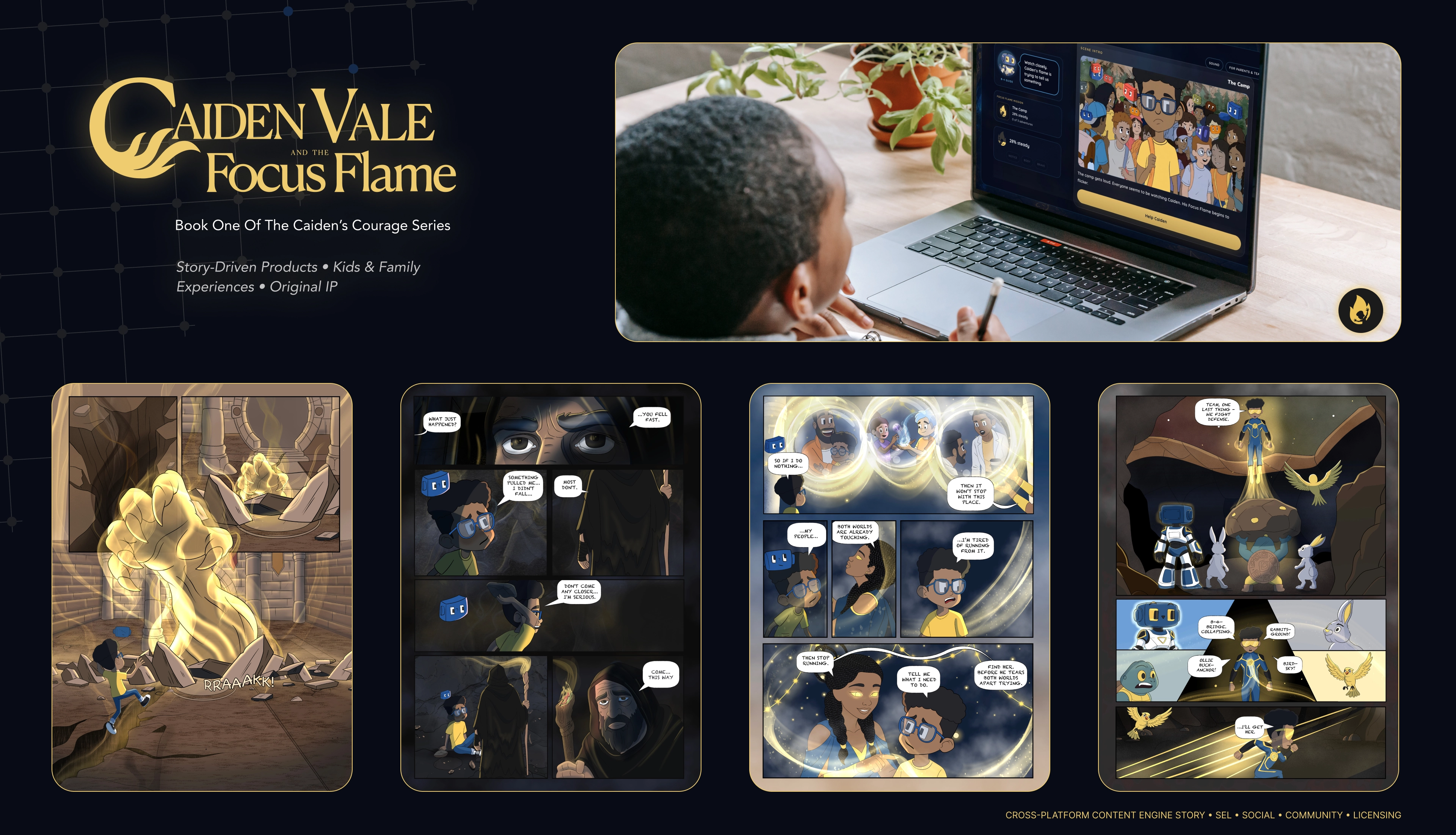
The campaign language was intentionally built to live beyond advertising.
The goal was to create a brand language kids could emotionally identify with — not just consume.
#FindYourFlame
The campaign was built around participation — encouraging students, parents, and teachers to share artwork, reading wins, emotional growth moments, acts of courage, and classroom achievements.
This transformed the audience into contributors to the brand narrative.
I led the creative, product, and franchise strategy for Caiden's Courage — shaping the world, experience architecture, brand system, campaign platform, interactive concepts, and audience engagement strategy.
Caiden's Courage established a scalable foundation for publishing, animation, SEL education, digital products, experiential learning, merchandise, and licensing opportunities.
Generated early preorder traction from parents and educators.
Developed a scalable framework for interactive SEL storytelling.
Built foundational franchise architecture spanning publishing, games, curriculum, and digital engagement.
Validated emotional resonance through community feedback and educator outreach.
Positioned the IP as a confidence-building world, not just content.
Modern kids don't just want entertainment. They want stories that understand them.
Caiden's Courage was built to prove that emotional storytelling, culturally aware branding, and immersive design can create a new category of children's media: entertainment that empowers.
A living story universe where kids discover focus, courage, and the flame already inside them.